
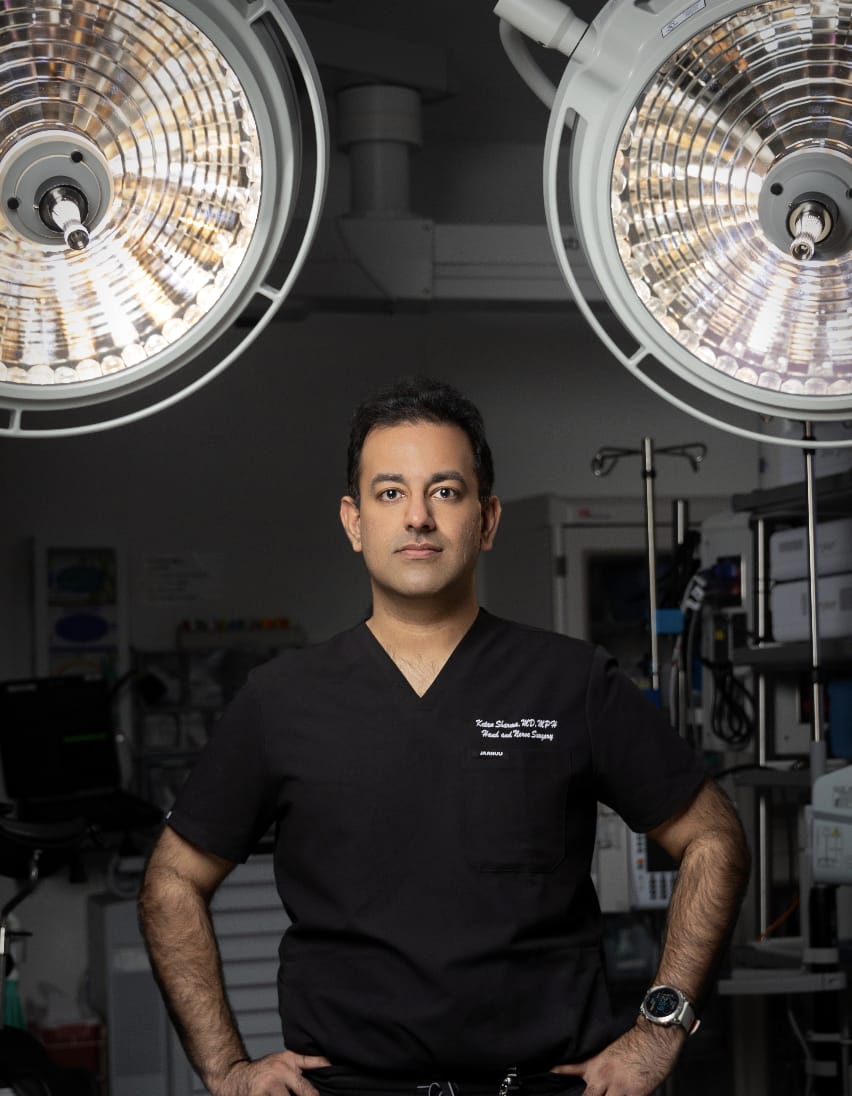
Ketansharmasurgery
Uploaded on Nov 27, 2026
Category
Business
Ketan Sharma highlights important considerations in hand surgery, where careful assessment and appropriate treatment help protect movement and sensation. Conditions such as tendon injuries, fractures, and nerve problems can affect everyday activities. Ketan Sharma emphasizes the importance of understanding each patient's needs, discussing treatment options, and allowing time for guided rehabilitation to support a safe recovery and daily independence. Visit here: https://ketansharmasurgery.blogspot.com/
Category
Business
                     Ketan Sharma Highlights Important Considerations in Hand Surgery
                     --- Page 1 ---
Ketan Sharma Highlights Important
Considerations in Hand Surgery
Hand surgery addresses a wide range of conditions, from sudden injuries and tendon damage
to nerve compression, joint disorders, and problems that develop over time. Because the hand
contains a closely connected network of bones, joints, tendons, nerves, blood vessels, and soft
tissues, even a relatively small injury can affect movement or sensation.
Ketan Sharma is associated with Plastic and Reconstructive Surgery, with professional interests
that include hand surgery. His perspective highlights the importance of careful assessment and
a treatment plan that considers both function and long-term recovery. The right approach
depends on the nature of the condition, the patient's daily needs, and the structures involved.
Accurate Assessment Is the Starting Point
A clear understanding of the problem guides every decision in hand surgery. The assessment
may include a discussion of how the injury occurred, when symptoms began, which activities
are difficult, and whether there is pain, numbness, weakness, or restricted movement. A
physical examination helps evaluate circulation, sensation, joint stability, tendon function, and
range of motion. Imaging, such as X-rays or other tests, may be useful when a fracture, joint
injury, or deeper structural problem is suspected.
Ketan Sharma highlights the value of looking beyond the most visible symptom. A cut, for
example, may appear limited at the skin level while also involving a tendon or nerve beneath it.
Identifying the full extent of an injury helps clinicians choose an appropriate course of care and
explain the likely benefits, limitations, and risks of treatment.


--- Page 2 ---
Choosing the Right Treatment for the Condition
Not every hand condition requires an operation. Depending on the diagnosis, treatment may
involve rest, activity modification, splinting, medication, wound care, or hand therapy. Surgery
may be considered when there is a structural injury that needs repair, when symptoms remain
troublesome despite appropriate non-surgical care, or when delaying treatment could affect
function.
Ketan Sharma believes treatment decisions should be based on the specific structures involved
and the patient's functional goals. A fracture, tendon injury, nerve compression, and ligament
tear each require a different assessment. For some injuries, timely repair is important; for
others, a period of guided non-operative treatment may be reasonable. Discussing options
openly helps patients understand why a particular approach is being recommended and what
recovery may involve.

Protecting Movement, Sensation, and Hand Function
The hand is essential for tasks that require strength, coordination, and fine control. Treatment
therefore needs to consider more than whether an injured structure has healed. Grip, pinch,
finger coordination, sensation, and comfortable joint movement can all influence a person's
ability to work, care for themselves, and take part in everyday activities.
Ketan Sharma highlights the importance of preserving function wherever possible. For example,
a tendon injury can interfere with bending or straightening a finger, while nerve damage may
affect sensation or muscle control. A treatment plan may need to address more than one
structure, particularly after complex trauma.


--- Page 3 ---
The expected result also depends on factors such as the severity of the injury, tissue condition,
general health, and how consistently rehabilitation recommendations can be followed.

Rehabilitation and Follow-Up Are Part of Treatment
Recovery does not end when a procedure is completed. Depending on the injury and repair, a
patient may need a period of protection in a splint, wound reviews, supervised exercises, or a
structured hand-therapy programme. Rehabilitation is intended to help restore movement and
strength while protecting healing tissues.
Starting exercises too early or progressing too quickly can place stress on a repair, while
unnecessary delays may contribute to stiffness.
Ketan Sharma highlights the importance of following an individualized recovery plan rather than
comparing progress with another person's experience. Follow-up appointments allow the care
team to monitor healing, identify concerns, and adjust activity or therapy when appropriate.
Patients should seek medical advice if they notice worsening pain, increasing redness or
swelling, fever, new numbness, colour changes, or an unexpected loss of movement.


--- Page 4 ---

Understanding Risks and Setting Realistic Expectations
As with other forms of surgery, hand procedures carry potential risks. These may include
infection, bleeding, scarring, stiffness, persistent pain, altered sensation, delayed healing, or the
need for further treatment. The risks vary according to the procedure, the condition being
treated, and the patient's health. Some injuries can be repaired, but complete restoration of
normal movement or sensation cannot always be guaranteed.
Ketan Sharma emphasizes the importance of discussing likely outcomes before treatment.
Patients should have an opportunity to ask about alternatives, recovery time, restrictions,
possible complications, and the role of therapy.
Realistic expectations help people prepare for the recovery process and make informed
decisions. A careful discussion also makes clear that results may develop gradually and that
progress can differ from one individual to another.


--- Page 5 ---

Conclusion
Hand surgery requires close attention to anatomy, diagnosis, treatment choices, and
rehabilitation. A successful plan is not defined by the procedure alone; it also considers how the
hand needs to work in everyday life and what support may be required during recovery.
Ketan Sharma highlights the value of individualized assessment, clear communication, and
realistic expectations when considering hand surgery. Anyone experiencing a hand injury,
persistent pain, numbness, weakness, or reduced movement should seek an assessment from
a qualified healthcare professional. Early evaluation can help clarify the cause of symptoms and
identify appropriate treatment options.
Comments